4-5 minutes
The endangered coho salmon of Tomales Bay, north of San
Francisco, are getting assistance from a stream restoration effort that
could help rescue them from near-extinction locally.
Through the project, fish ecologists hope they can restore habitat to
rebuild decimated populations of the historic fish, which once was a
staple of indigenous diets and later California commercial fishing.
Central California coast coho salmon formerly were plentiful on the
West Coast, but the population has shrunk so low that the fish is listed
as endangered in California, Oregon and Washington under the federal
Endangered Species Act. It is now illegal to catch coho salmon in
California. Cohos are not protected in Alaska.
The fishes' spawning grounds are becoming hard to find.
Unlike Chinook salmon, which lay eggs in rushing rivers, coho prefer small streams.
Where once the coho spawned in almost 600 natural small streams and
rivers in California, that habitat has now mostly disappeared. Most
small tributaries have been encroached by housing development or dammed
for drinking-water reservoirs.
Still, the cohos are beloved in the region. In the Lagunitas Creek
watershed, tourists come from San Francisco and beyond to watch the
salmon run every winter along the stream beds. The fish swim 26 miles
upstream from the ocean to spawn in December and January.
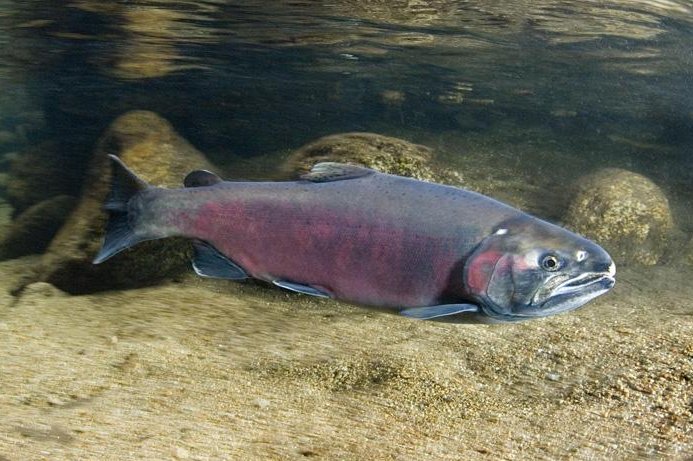
"They're big fish, 24 to 30 inches, in their red spawning colors,"
said Chuck Schultz, a member of the local Golden Gate Trout Unlimited
chapter.
Leaping fish
During the yearly salmon run, the fish leap up a series of waterfalls
called the Inkwells, "about 6 or 7 feet in the air," Schultz said.
"Seeing a big fish like that in a small stream is really something."
Usually, about 400 to 500 leaping coho make the annual trip to the
spawning grounds, but this year's numbers were dangerously small, with
fewer than 90 fish making the trek -- among the lowest counts in 25
years, according to the Marin Municipal Water District.
"We've seen the coho population bounce back after disappointing runs
and we're hopeful that improving ocean conditions will mean higher
returns in coming years," said Eric Ettlinger, aquatic ecologist for the
water district.
This summer, earthmovers will remove the remnants of a man-made fish
barrier, possibly making it significantly easier for cohos to return to
their spawning grounds in west Marin County.
"Historically, there were thousands of these fish, and the numbers
are now dismally low," said Todd Steiner, executive director of the
Olema-based Salmon Protection and Watershed Network. More than 95
percent of their population has been lost, said Steiner, a wildlife
biologist.
In June, the network and the California Department of Fish and
Wildlife will create a new path for coho in the San Geronimo Creek,
which runs through a shuttered golf course north of San Francisco.
A concrete and metal structure called Roy's Pools will be replaced by
a $2 million project that will create a free-flowing channel for the
salmon, as well as steelhead trout and other stream wildlife. Volunteers
also will replace native plants, including redwood seedlings. A visitor
bridge will allow fish viewing.
Round-trip journey
The life of the wild coho is a round-trip journey between fresh and ocean waters.
The fish live for three years. As juveniles, they grow to about 3
inches long in freshwater streams, and then make the trek through the
bay to the Pacific Ocean, where they grow to 2 feet long and with
weights of 8 to 10 pounds
They make one trip back to their birthplace to spawn and die. Wild
coho will not mingle or breed with fishery-raised coho salmon that are
stocked in other local river habitats.
Still, the restoration project alone might not be enough to restore the coho population, the salmon group's
Steiner said.
"We're taking down a tiny dam, not big at all, but it is one of the
only streams left for coho to reach the headlands," Steiner said. "We
may not be able to bring them back from brink of local extinction. The
science of habitat restoration is new, and we learn every time we do a
project. There are no guarantees in this line of work."

Join Geezgo for free. Use Geezgo's end-to-end encrypted Chat with your Closenets (friends, relatives, colleague etc) in personalized ways.>>
Comments
Post a Comment