Did Covid-19 spread during the Consumer Electronics Show?
on
Get link
Facebook
X
Pinterest
Email
Other Apps
Plausible, but more evidence is needed
By Shawn Knight
Bottom line: For its part, CES
organizers told APM Reports that they aren’t aware of any confirmed
cases of Covid-19 from the conference. A single antibody test result
isn’t enough to conclude that Covid-19 was indeed present at CES. It is
plausible that the person in question contracted the virus afterwards
but didn’t show any symptoms. Perhaps his post-CES sickness was just
another type of illness – conference crud, as it is commonly called.
APM Reports has published
evidence that it claims likely suggests Covid-19 was circulating in the
US far earlier than believed, perhaps spreading during the Consumer
Electronics Show in Las Vegas in early January.
The publication points to the positive results of an antibody test received this week for Michael Webber,
a professor at the University of Texas at Austin. Webber, who also
works for a global energy firm out of Paris, was one of more than
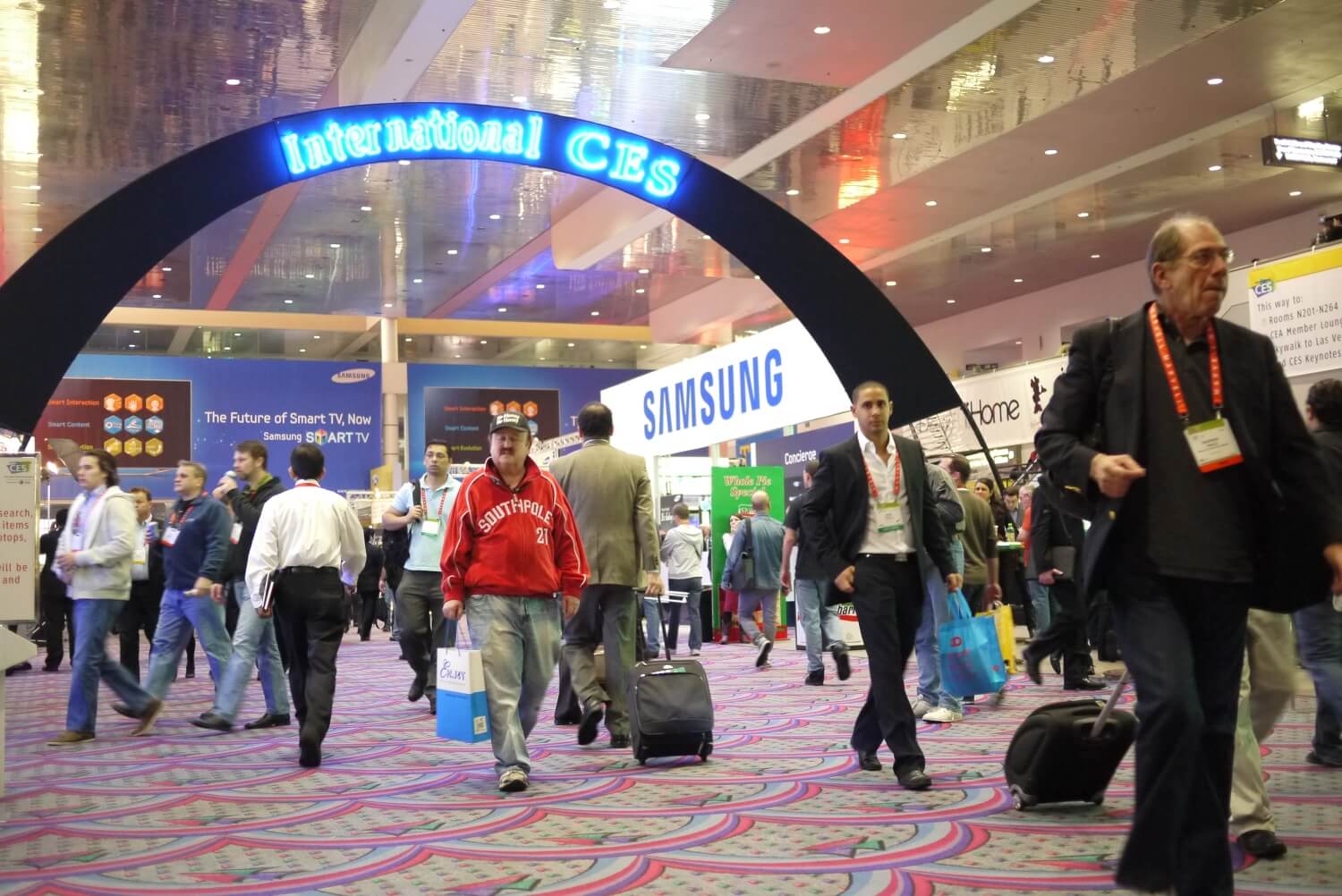
170,000 attendees from 160+ countries that showed up for the event in
early January.
According to APM Reports, Webber also stopped in Hawaii, Southern California and San Francisco on his way to Las Vegas for CES.
Like several others, Webber started feeling ill by the time the four-day conference had concluded. On the last day of the show, Webber tweeted that the Las Vegas airport sounded like an infirmary with “all sorts of people sneezing & coughing.”
The publication cites several other mentions on Twitter from people who had attended CES and felt terrible afterwards.
Fortunately, Webber recovered. This week, he received the results for
a serology test conducted in late April that can identify antibodies
“that indicate a person has recovered from the Covid-19 virus.” The test
he took “revealed what he had suspected,” the publication said, adding
that it was manufactured by Guangzhou Wondfo Biotech, a company that
sells pregnancy tests to Amazon and Walmart.
The test was “approved by the Chinese equivalent of the U.S. Food and
Drug Administration and is available in the United States under
emergency guidelines.” Furthermore, it is 99 percent effective according
to the manufacturer but hasn’t been approved by the FDA in the US.
Webber told the publication that he hasn’t been sick or traveled since feeling ill in January.
As someone that has attended CES four times, I can attest that it is
not uncommon to feel bad after the show. CES officially runs for four
days but in reality, most people are there earlier to cover press events
and may even stay after to get work done, see the city or let the
crowds die down at the airport. During the madness, you’re constantly on
the go, shaking hands with all sort of strangers, bumping shoulders on
the show floor, handling gadgets that thousands of others have had their
mitts on, partying all hours of the night and running on just a few
hours of sleep. Factor in plane rides to and from Las Vegas and yeah,
you’re probably going to get sick.
Then again, a massive trade show like CES would be the perfect
incubator for a virus to spread, especially if hardly anyone knew about
it. It could also explain why there are so many cases in the US and how
the virus could have spread around the globe so quickly and efficiently.
But as Dr. Chin-Hong, of UCSF's School of Medicine, correctly notes,
more “old fashioned sleuthing” is needed to determine if CES truly
played a role in the spread of Covid-19.
Comments
Post a Comment