By SETH J. FRANTZMAN5-7 minutes
Iraq relies on oil and is already in economic dire distress. The
successful Kurdistan autonomous region also relies on oil and will be
hit hard.
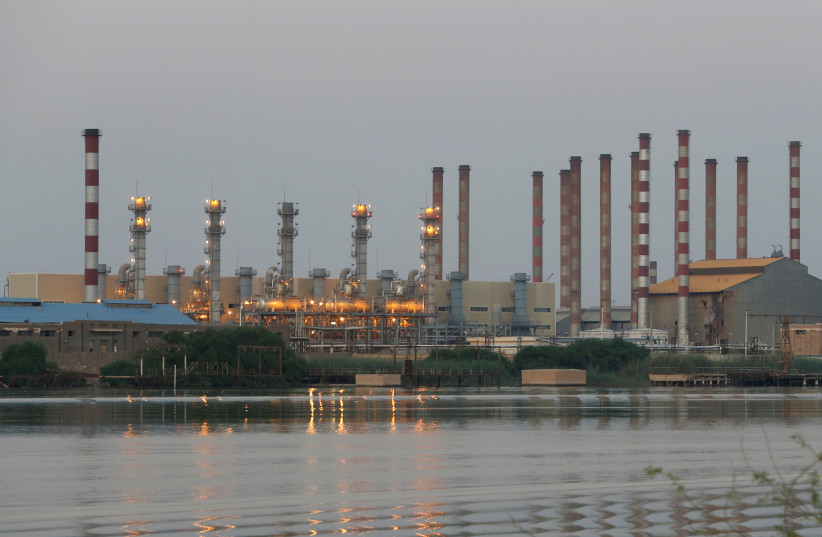
A general view of Abadan oil refinery in southwest Iran,
is pictured from Iraqi side of Shatt al-Arab in Al-Faw south of Basra,
Iraq September 21, 2019
(photo credit: REUTERS/ESSAM AL-SUDANI)
Oil prices appeared to collapse on Monday as the May futures
contracts for West Texas International, a benchmark trading contract,
fell below zero. This doesn’t mean oil prices will really be zero, but
overall oil prices have been down globally and the market turbulence has
shocked people. Prices at the pump will not be reduced as much as
barrels of oil will now decline from $60 last year to historic lows this
month.
The oil prices are suffering the ripple effects of the coronavirus pandemic and a
price war
that took place between Saudi Arabia and Russia in early April. Those
countries agreed on a deal between April 9 and 12 which was supposed to
stabilize prices and lead to some production cuts. It was too late for
the markets though.
The overall effect of the collapse in oil
prices will not be known for sometime. It appears that it is one of the
many secondary curves that have come out of the more well known
coronavirus curve of infections. That curve was flattened by lockdowns.
But lockdowns also caused travel to grind to a halt. Uncertainty meant
that there is less demand for oil. Oil prices were already declining but
this is the kind of uncertainty and shock that causes unprecedented
results.
The next impact of the virus and oil prices is likely
come in other tensions and crises in the Middle East. That means there
may be growing attempts by Iran to pressure the US Navy in the Persian
Gulf. This has already happened but Iran is signaling that tit has new
ship missiles and drone technology that can be used against the US and
allies.
There may be other ripple effects, such as economic
collapse of states or political upheaval. Several countries in the
region rely particularly on the oil trade. This includes Kuwait, Saudi
Arabia, the UAE, Iran,
Iraq,
Algeria, Azerbaijan, Qatar, Oman and Bahrain. Some countries GDP is
dominated by oil, including Kuwait, Saudi Arabia, Iraq and Oman. These
countries have attempted to reduce their need to rely on oil in recent
years, seeking to diversify their economies as they predicted oil prices
will decline. But they couldn’t move fast enough. Saudi Arabia’s Vision
2030 has sought to diversify the economy and create new, non-oil based,
jobs. But that is a decade off.
Iraq relies on oil and is already
in economic dire distress. It has had six months of protests because
the government failed over the last decade to invest in basic
infrastructure. The successful Kurdistan autonomous region also relies
on oil and will be hit hard.
Other countries may profit from low
oil prices. Jordan, Israel, Egypt, Lebanon and other countries can
benefit. Many of these countries have lost massively in tourism dollars
due to the pandemic, so this is a consolation prize. The King of Jordan
has sought to prepare for low oil prices. In the past Jordan has
subsidized fuel prices and when it sought to lift the subsidies it ran
into protests.
The falling prices can be a positive and negative
to countries such as Lebanon which already have an economy on edge.
These countries rely on remittances from abroad and some of that comes
from the Gulf. An oil crises can actually harm the remittances even if
it makes some economic pain decrease. Turkey expects to be a winner as
well, reducing the cost of energy imports and reducing inflation. This
is yet another mixed bag for Turkey because the country now has the most
coronavirus cases in the Middle East. So it may profit from lower oil
prices but suffer in other ways.
The long term story of the oil
price collapse and the pandemic are a series of rare black swan events
being loosed on the Middle East. The oil price collapse is likely the
first of many crises and it will cause many countries to be concerned
about what comes next. With closed borders, concerns about conflicts in
Syria, Libya, Yemen and elsewhere, and declining interest from the
Western powers, Middle Eastern countries are now more on their own than
in the past. The era of great power rivalries such as the Cold War or
era of colonial mandates is long over. The era of US hegemony is
declining as the US shift forces from the region and contemplates more
withdrawals.
This means regional conflicts and alliances are
increasing as well as proxy wars in places like Yemen, Libya and Syria.
For instance in Libya a UAE-Egypt-Saudi backed faction is fighting a
Turkey-Qatar-backed faction. In Yemen the Iranians are backing the
Houthis against a Saudi-backed government. In Syria the Russian and
Iranian-backed regime face off against the US and against Turkish-backed
groups. The oil crisis is a new wrench thrown into the mix.
Join Geezgo for free. Use Geezgo's end-to-end encrypted Chat with your Closenets (friends, relatives, colleague etc) in personalized ways.>>
Comments
Post a Comment