Māori health experts and industry leaders have largely been
excluded from Parliament's Epidemic Response Committee meetings, leaving
many feeling extremely frustrated and left out.
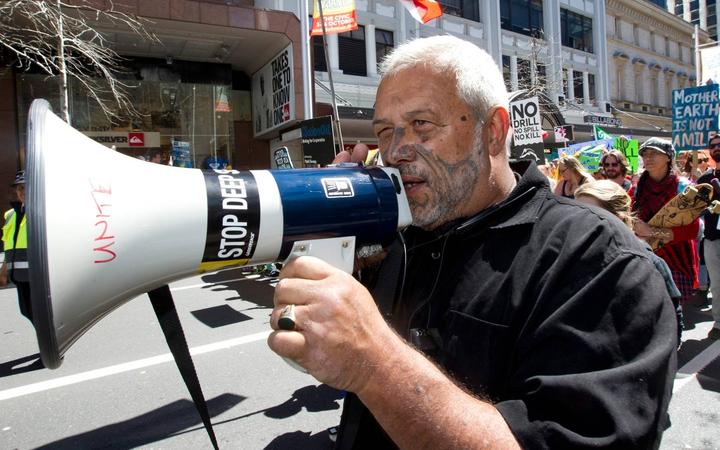 Iwi Chairs Forum spokesperson Mike Smith.
Photo: NZ Herald / File
Iwi Chairs Forum spokesperson Mike Smith.
Photo: NZ Herald / File
The committee is tasked with challenging the government's response to
Covid-19, but in six weeks only two Māori organisations, Te
Whakaruruhau o Ngā Reo Irirangi Māori, the network of iwi radio stations
and chair of the Federation of Māori Authorities, Traci Houpapa, have
been invited to speak.
Not even the country's national Māori pandemic group Te Rōpū
Whakakaupapa Urutā - which includes more than 50 leading Māori health
experts, policy specialists and academics - has been approached by the
committee.
Its co-leader Teresa Wall said that meant MPs had missed out on
expert advice on how the government could be responding to the needs of
Māori.
"It is unfortunate that we haven't been asked or that Māori haven't been asked," she said.
"Because of the breadth of expertise sitting within the group, we
would have been able to provide policy advice and implementation and
operational advice about how government could respond most effectively
for Māori communities."
She said the government's $56 million Māori response package would go
a long way, but Māori needed to be at the forefront of decision-making
and policy too.
"The things that really drive inequalities or inequity, is not the
little bus you know, putting more money into Māori initiatives or
tampering around the edges. It's actually changing the whole bus," she
said.
"Unless we maximise this opportunity to re-imagine what the new
normal could look like, we will go back to Māori occupying the same
social position that they had, or probably be at a worse level
post-Covid-19.
"This select committee has that power to recommend to government what
it needs to do to change the social trajectory for Māori coming out of
Covid-19."
 Simon Bridges during one of the Epidemic Response Committee's online meetings.
Photo: Parliament
Simon Bridges during one of the Epidemic Response Committee's online meetings.
Photo: Parliament
National Party leader and Epidemic Response Committee chair Simon
Bridges has the sole discretion and final say of who appears in front of
the Committee.
In a statement, Bridges said that Dr Shane Reti - a National MP - had
been on the committee every week and had a reporting line back to the
Northland Iwi leaders Forum, which was a conduit to iwi around the
country.
Bridges said other National MPs had also been actively involved in the committee.
"Other National Māori party caucus members, Jo Hayes and Harete
Hipango, have been involved in shaping and analysing questions for the
ERC. All National Party caucus members received a copy of the Māori
coronavirus testing rates for their region when they were released by
the ERC."
He added his aspiration was to make the committee accessible to as many Kiwis as possible, including input from Māori and iwi.
But not a single iwi representative has been invited to speak so far.
Iwi Chairs Forum spokesperson Mike Smith said Māori suffered higher
rates of chronic illnesses than other New Zealanders and were therefore
particularly vulnerable to the virus.
As such, input from Māori health workers should have been urgently sought by the committee.
"We've got high vulnerabilities, including general underlying health
problems, and Māori health professionals know and understand these
issues and they're able to bring that lens to the discussion."
He argued that as Treaty partners, Māori should have been included at every stage.
"We haven't been invited at all which is a surprise to me and I would
have expected that if the Crown was serious about its responsibilities
to us and the Treaty partnership, and everything they put in our Treaty
settlement agreements, then we would have been invited."
The absence of Māori voices was not lost on the government's former
chief science advisor, Sir Peter Gluckman who spoke at the committee
yesterday.
"Māori have shown great community and wisdom in the way that they
have looked to address the problems they face. Their voice at this
committee would be useful."
Te Rōpū Whakakaupapa Urutā said the group would still love the opportunity to present to the committee.

Comments
Post a Comment