Accidental history—remastering the campy teen horror game Congress famously hated
on
Get link
Facebook
X
Pinterest
Email
Other Apps
Daniel Starkey
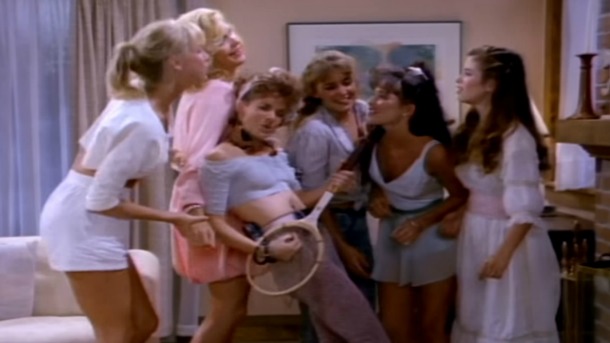
A scene like this doesn't exactly scream "2017 video game." And yet...
Night Trap might not
seem like a game that would be especially cumbersome to port to modern
consoles. Among the first in the oft-forgotten early-’90s trend of “FMV (full motion video) games,” the title was nothing more than a lightly interactive series of pre-recorded videos.
But after years of effort to get the project off the ground,
months of coding and delays, and time spent navigating the grueling
certification process for modern console launches, independent game
designer Tyler Hogle was ready to be done in late summer 2017. Pressing
through exhaustion, Hogle's target release date was days away—but so was
the birth of his child. On top of it all, after a last-minute patch to
add extra language support, he noticed that he'd accidentally broken his
own game and needed a patch out. Fast.
An accidental piece of history
Long before Hogle's dilemma, the original Night Trap was an unlikely standard-bearer in the debate on violence in video games. Originally filmed in the mid-’80s for Hasbro’s canceled VHS-based NEMO console, Night Trap featured big names of the time including child star Dana Plato (of Diff'rent Strokes fame).
By the early ‘90s, though, it had already been delayed and reworked to
be a relatively tame riff on teen slasher horror. When the game first
hit the Sega CD in 1992, it already looked and felt quite dated. It
didn’t help that the Sega CD’s limited hardware struggled to render even
a low-resolution, low frame-rate version of the original film—don't
even ask if it responded snappily for the interactive bits.
As the game opens, you're introduced to a specialized team
of law enforcement who have been investigating mysterious
disappearances. Agent Kelli (Plato) goes undercover during a slumber
party, and you're basically left watching security camera footage for
intruders and then using access codes you collect from eavesdropping to
control a system of elaborate traps built into the house itself.
While it's clearly influenced by slasher flicks of the ‘70s and ‘80s, you are there to stop
assault—not delight in it like those films. And because of Hasbro's
initial involvement, there's no nudity or sex, nor any significant
violence besides people being slowly dragged off-screen, screaming.
Maybe it can be blood-curdling to some folks, but it's far milder than
its place in the annals of gaming lore would suggest. A tween-friendly
modern horror game like Five Nights at Freddy’s is probably more horror-filled.
A remastered trailer shows how well (or not well) the footage has aged
Players were originally meant to defend a group of teenage
girls from an onslaught of ninjas. Over time, though, those foes morphed
into toothless, sickly vampires with a wobbling toddle and no weapons
beyond a machine that could wrap around its victim and drain them of
blood. At the time, it was thought that this ridiculous “weapon” would
keep the game out of the realm of "reproducible" violence, thus making
the game "safe" for younger players. Instead, even the game's original
director, James Riley, thought the change from ninjas to wobble-piers
made the game more creepy and gruesome, not less.
In any case, Night Trap soon earned its place in gaming history when it became a central subject of numerous congressional hearings. In December 1993, senators Joe Lieberman and Herb Kohl held Night Trap right alongside the much bloodier Mortal Kombat to dissect video game violence and its impact on the country. Lieberman would admit
he never even played the game, but he still quickly pointed to a scene
involving those not-originally-included vampires to support his views
that Night Trap featured sexual aggression toward women.
According to Steve Kent's Ultimate History of Videogames, the notoriety actually helped spur sales of Night Trap at
first. The game sold 50,000 copies in the week after the high-profile
hearings. But ultimately the unexpected spotlight grew too hot. The two
largest US toy chains at the time—Toys "R" Us and Kay-Bee Toys—pulled
the game two weeks before Christmas after being bombarded with negative
phone calls, according to GamePro reports
at the time. Eventually, SEGA pulled the original from the market and
announced a censored version was in the works. The hearings infamously
led to the Entertainment Software Ratings Board, still in use today.
Mortal Kombat, which was again much gorier, never left shelves. But deserved or not, the scrutiny propelled Night Trap into the spotlight and forever made it a cultural touchstone of early ‘90s gaming.
Comments
Post a Comment