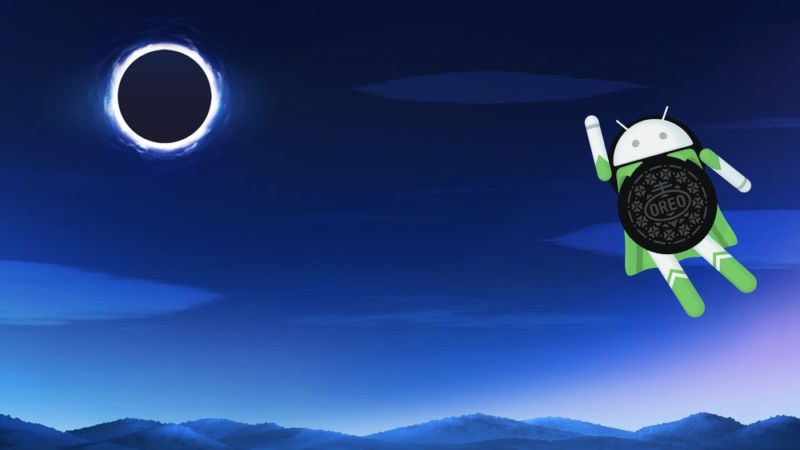
NEW YORK CITY—Happy Eclipse Day! As the Moon slowly crept
its way across the Sun, Google took the opportunity to host an
Eclipse-themed Android 8.0 launch event in New York City. Along with
eclipse glasses and a simulcast of NASA's eclipse livestream, Android
"O" finally got its full name: "Android 8.0, Oreo."
Like KitKat
before it, Android's alphabetical snack-themed codenames have gone
commercial and partnered with an actual snack producer, adopting
Nabisco's trademarked "Oreo" as the name for this release. The event
also came with the traditional statue unveiling: a superhero Android
Oreo.
With today's event, Android 8.0 Oreo is shipping out across
all the usual distribution methods. The Android Open Source Project
(AOSP) is getting the 8.0 code drop. OTAs will begin to roll out "soon"
to the Pixel, Pixel XL, Nexus 5X, Nexus 6P, Nexus Player, and Pixel C,
and system images should
be up on developers.google.com soon. Any device enrolled in the Android
Beta Program will also be upgraded to these final builds.
Thanks to several developer preview releases, we mostly know
what's in Android 8.0 Oreo. The update brings a big revamp of the
notification panel, with a new layout, colors, and features, like
"snoozing." Google is clamping down on background apps for more
consistent performance and better battery life. There are new, updatable
emoji, a faster startup time, all new settings, and plenty of security
enhancements, including the new "Google Play Protect" malware system.
Most importantly, Android 8.0 brings Project Treble to new devices, a
modularization of the OS away from the hardware, which should make it
easier to develop and roll out new Android updates.
For all the third-party Android OEMs out there, you're on
the clock! We know what to expect from companies like LG and Samsung by
now, but there are actually a few new Android OEMs this year that will
be interesting to watch. Nokia has been touting a "pure, updated
Android" angle for its Nokia 3, 5, 6,and 8,
so now it's time to back up that talk with a quick OS release. We're
also going to keep an eye on Essential, the OEM started by the father of
Android himself, Andy Rubin. He's got to care about update speed,
right? Considering Android O code has been shared with OEMs since the
first developer preview in March, OEMs have had a lot of time to prepare
for today.
If you didn't buy a Google-branded Android phone, you're
going to be stuck waiting. 2017 flagships from major OEMs, like the
Galaxy S8 and LG G6, usually take about six months to update to a new
version. For 2016 flagships, you'll be waiting even longer than
that—usually something like eight months to a year. For everyone else,
you'll get Android 8.0 when you throw your existing smartphone out and
buy a new one.
Once I get a handle on the final build and documentation, you can expect the usual book-length Android review.
Update: Android 8.0 system images are up for the Pixel, Pixel XL, Pixel C, Nexus 5X, Nexus 6P, and Nexus Player
Comments
Post a Comment